More than 50% of new businesses fail within the first five years. The reasons vary, but at their core, most failures stem from a lack of clear direction and measurable progress. Many companies struggle to define their goals, align their efforts, and track their success, leading to missteps that can ultimately derail growth.
This is where OKRs come in — a goal-setting framework designed to help businesses stay focused, accountable, and results-driven. OKR stands for Objectives and Key Results, representing the clear, inspiring strategic goals and the measurable, trackable outcomes of the work we do to achieve them.
OKRs aren’t necessarily limited to business — we at Oboard are big promoters of personal OKRs, which are great for self-improvement and the overall organization of one’s life. However, for brevity, this article will explore only the OKR meaning in business — what they are, why they are effective, and how they can help your company become and remain successful.

What is OKR in Business?
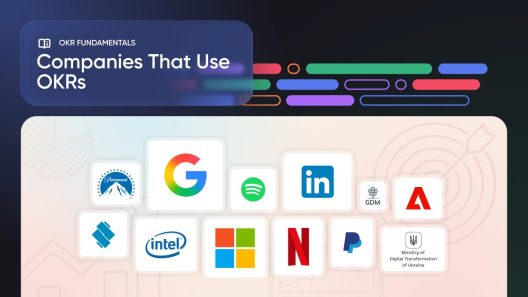
The OKR framework is a cornerstone of goal-setting in modern businesses. It was first introduced in the 1970s by Andy Grove at Intel, but gained widespread popularity when Google adopted it in 1999. Since then, leading companies like LinkedIn, Microsoft, and Airbnb have embraced OKRs to drive execution, innovation, and business growth. Nowadays, even businesses outside the tech industry are actively incorporating OKRs into their goal-setting practices.
Want a quick visual explainer? Watch our What is OKR in Business? video on YouTube!
How OKRs Help Businesses Thrive
The OKR framework provides a clear structure for organizations to set goals and track progress efficiently. Here’s why it works:
- Alignment: OKRs ensure that company-wide objectives are reflected in department and individual goals. When everyone understands how their work contributes to the bigger picture, it drives collaboration and shared purpose.
- Focus: By defining a few key priorities rather than spreading resources thin across too many initiatives, businesses eliminate distractions and stay committed to high-impact goals.
- Measurability: Unlike vague mission statements, OKRs are tied to specific Key Results that quantify success. This makes it easy to track whether goals are on track, at risk, or need adjustment.
- Accountability: OKRs create a culture of ownership by assigning clear responsibilities. Since progress is regularly reviewed, teams become more engaged and proactive in achieving results.
By using OKRs, businesses of all sizes gain clarity, drive results, and foster a culture of accountability. This, in turn, results in a much higher level of engagement between the employees and results in
How Does OKR Framework Work?
OKRs help businesses focus, align teams, and track progress effectively. Instead of vague goals, the OKR methodology ensures everyone knows what success looks like and how to achieve it.

At its core, an OKR consists of:
- Objectives: What you want to achieve—clear, ambitious, and motivating.
- Key Results: How you measure progress—specific, trackable, and outcome-driven.
For example, a company focused on customer satisfaction might set this OKR:
- [O] Improve customer satisfaction
- [KR 1] Increase Net Promoter Score (NPS) from 45 to 60
- [KR 2] Reduce average response time from 24 hours to 8 hours
- [KR 3] Increase customer retention rate from 70% to 85%
This structure keeps teams aligned. Customer support, product development, and marketing contribute to the same goal. It also makes progress easy to measure so everyone stays on track.
OKR Alignment and Breakdown
One of the biggest strengths of OKRs is their ability to align goals across teams and departments. Instead of isolated objectives, OKRs create a structured hierarchy where company-wide goals break down into team and individual objectives.
Here’s how it works:
- Company-Level OKRs – High-level strategic goals that define the organization’s priorities.
- Example:
- [O] Expand into the EU market
- [KR1] Get 100K in revenue by the end of the year from EU
- [KR2] …
- [KR3] …
- Example:
- Department-Level OKRs – Each team defines objectives contributing to the company’s success. (Q1)
- Example (Sales Team):
- [O] Expand to France as a new market
- [KR1] Close 50 deals in France during Jan-March
- [KR2] …
- [KR3] …
- Example (Sales Team):
- Team OKRs – Specialized teams within departments set their OKRs to align with the strategic priorities.
- Example (Partnership Team):
- [O] Build relationships with key partners in France
- [KR1] Secure three strategic partnerships in France
- [KR2] …
- [KR3] …
- Example (Partnership Team):
By breaking down OKRs, businesses ensure that every team and individual works toward the same big-picture goals.
Of course, these are just the basics. OKRs, despite being relatively simple on the surface, can be surprisingly nuanced — especially if you want to implement them correctly and to maximum effectiveness. Check out Oboard’s OKR Guide and OKR Alignment and Breakdown Guide on the Oboard blog to learn more.

OKR Goals vs. Traditional Goal-Setting Methods
Businesses use different frameworks to set and track goals, but not all offer the flexibility and focus of OKRs. Two of the most common alternatives are SMART goals and KPIs. While each method has strengths, OKRs provide a more dynamic approach that keeps teams aligned and responsive to change.
How OKRs Compare to SMART Goals
SMART goals (Specific, Measurable, Achievable, Relevant, and Time-bound) are a great starting point for structured goal setting. However, OKRs take it further by breaking down objectives into multiple key results, making them more actionable, scalable, and adaptable.
Here’s an example comparing a SMART goal with an OKR for a sales team:
- Goal: Increase revenue by 15% next quarter by improving sales team performance and acquiring new customers.
While this goal follows the SMART framework, it doesn’t define how to achieve it. The path to success is unclear, and specific actions or progress indicators are not broken down. In comparison, here’s an OKR:
- [O] Expand revenue growth and improve sales team performance
- [KR 1] Increase total revenue from $1M to $1.15M
- [KR 2] Improve sales conversion rate from demos from 35% to 55%
- [KR 3] Acquire 50 new enterprise customers through industry events
The OKR provides a more precise direction, ensuring the team isn’t just aiming for abstract revenue growth but actively working toward measurable improvements in conversion rates and customer acquisition.
OKR methodology builds on the principles of SMART goals. In comparison, they encourage a broader, more flexible, and results-driven approach that allows businesses to adjust and refine their strategy over time.
How OKRs Compare to KPIs
While OKRs and KPIs are sometimes compared, they serve different purposes and are not interchangeable. They work best when used together.
- KPIs (Key Performance Indicators) are like a company’s life signs — they measure ongoing performance in key areas such as revenue, customer satisfaction, or operational efficiency. They tell you how well your business is doing, no more, no less.
- OKRs (Objectives and Key Results) focus on driving change. They define what improvements a company wants to make and how success will be measured. OKRs help teams take action and push the business forward.

KPIs monitor performance, while the OKRs define specific improvements to achieve better results. Many businesses use OKRs and KPIs together — KPIs provide insights into company performance, while OKRs help set improvement goals based on those insights.
Oboard OKR App currently focuses on OKR tracking, but support for KPIs is coming soon. This will allow businesses to track their performance indicators and goal-setting progress in one place, creating a seamless strategy execution system.
Examples of Business OKRs Using Oboard OKR App
Implementing OKRs is one thing — managing them effectively is another. Many businesses struggle to track progress, keep teams aligned, and adjust goals as priorities shift. The Oboard OKR App solves these challenges by providing a visual, intuitive platform for OKR management.
Unlike spreadsheets or static reports, Oboard’s dashboard provides a clear, interactive view of OKRs. Teams can:
- Set Objectives and Key Results for different departments or projects.
- Monitor progress with real-time tracking and automated updates.
- Adjust OKRs dynamically as business priorities evolve.
Oboard makes it easy to see the bigger picture while focusing on the details that drive real progress. For example:
A marketing team using OKRs might set an objective to increase brand awareness. With Oboard, they can define clear Key Results and track them effortlessly.
- [O] Establish a Strong Brand Presence and Market Awareness
- [KR 1] Achieve a 10% increase in LinkedIn subscribers
- [KR 2] Organize 4 webinars with industry leaders
- [KR 3] Get featured in the industry Gartner report
With these OKRs set, the team can link Jira Issues relevant to the Key Results and use them as initiatives — actions necessary to complete the Key Result. Depending on the approach, these initiatives may automatically contribute to the KR score in the Oboard app — or the score can be tracked manually.
If the Objective is considered critical, the team may add it to the custom dashboard — a powerful visualization tool that allows the company to monitor the most crucial OKRs.

Finally, if the completion of this business OKR depends on other OKRs, it can be added to the company roadmap. This way, your team members can easily see other teams’ current and expected progress and align their processes around it.
How to Get Started
Effective goal setting is the foundation of business success, but even the best intentions can fail without the proper framework. OKRs provide a structured yet flexible approach that helps companies align their teams, focus on what matters, and measure progress.
Unlike traditional goal-setting methods, OKRs encourage ambition, adaptability, and transparency, ensuring every objective is tied to measurable outcomes. Whether you’re a startup looking to scale, an enterprise driving strategic execution, or a remote team staying aligned across time zones, OKRs can help turn big ideas into tangible results.
Managing OKRs effectively requires the right tools, and that’s where the Oboard OKR Apps comes in. With real-time tracking, intuitive dashboards, and dynamic updates, Oboard makes it easy to set, adjust, and measure OKRs without the hassle of spreadsheets.
If you’re ready to take your business goals to the next level, start using OKRs today and see how structured goal setting can drive real impact. To learn how OKRs can transform your organization, sign up for a demo with Oboard and see what we can do for you!