Strategy might live in one place, while the goals that connect it to execution are in another, and the execution itself in a third system. And when those three don’t talk to each other, things can get messy.
Oboard OKR Software is now available for Microsoft Azure DevOps, giving teams a way to connect company goals directly to the work already being planned and delivered in Azure Boards. And for organizations already deep in the Microsoft ecosystem, this gives you a Microsoft OKR Software that works alongside Azure DevOps, Microsoft Teams, and Power BI — keeping strategy much closer to where the work happens.

Connect Strategy to the Work in Azure DevOps
The real value of a Microsoft OKR tool for Azure DevOps is not simply being able to create goals. It’s being able to manage OKRs in Azure DevOps alongside the people, work, and data already moving through your Microsoft ecosystem.
Build a clear view of strategy across the organization
Set company, department, and team objectives in one place, then organize them into workspaces that reflect how your business actually operates. Oboard also lets you customize objective levels and track key results, KPIs, and initiatives using the language your organization already uses.
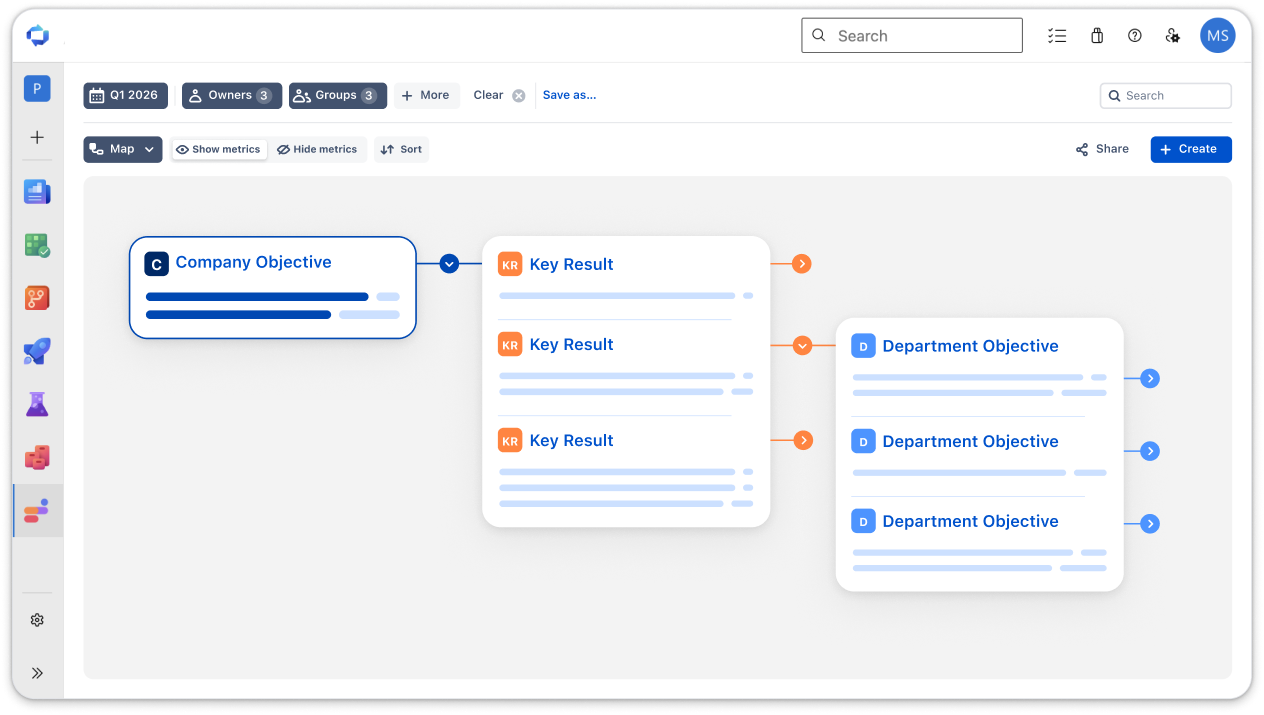
From there, different views help different teams make sense of the same strategy: use Alignment view to understand how goals connect, the OKR Map to see the bigger picture, or Roadmap to plan delivery across the cycle.
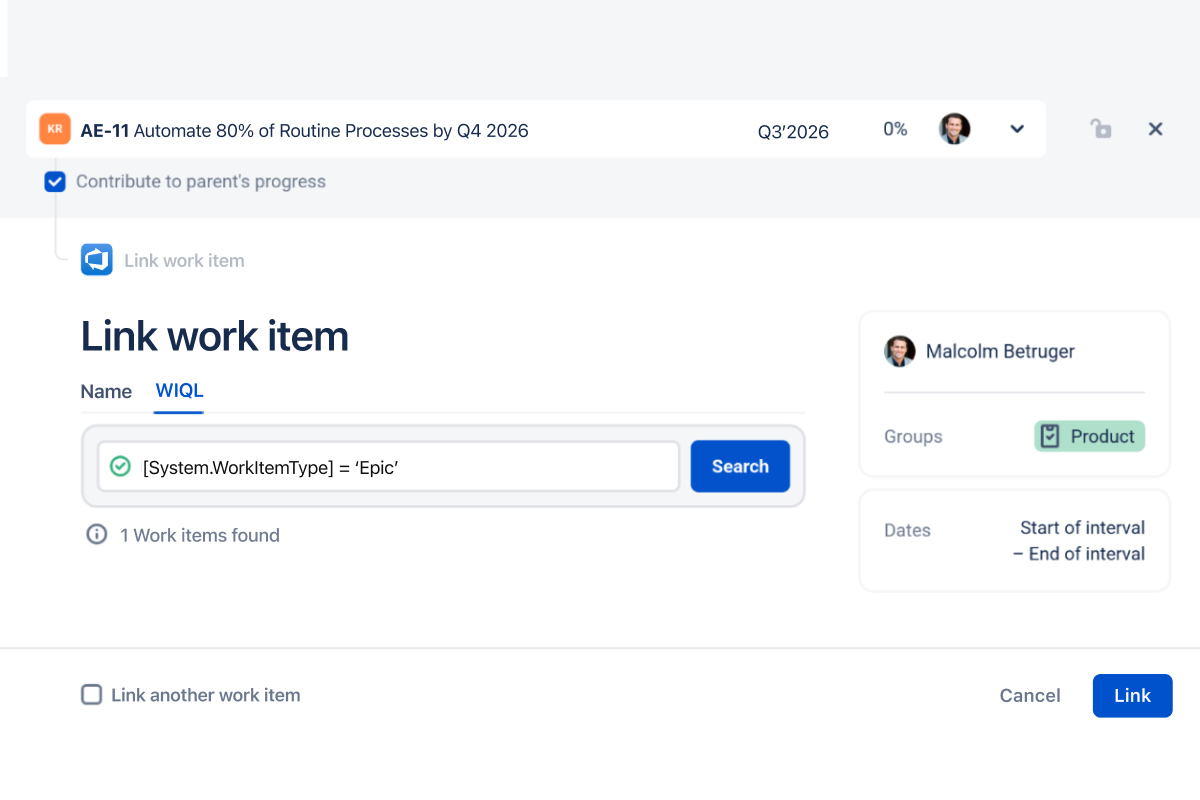
Connect Azure Boards work directly to your OKRs
With Azure DevOps OKRs connected through Oboard, Azure Boards work items can be linked directly to objectives or key results, either individually or in bulk with a query. Teams keep managing delivery in Azure Boards, while the connection back to strategy stays visible in Oboard. No separate mapping exercise when it’s time to report on progress.
Let delivery update progress automatically
Once work is connected, Oboard can use it to update goal progress automatically. But not every completed task should automatically mean a business outcome has been achieved, so you stay in control.
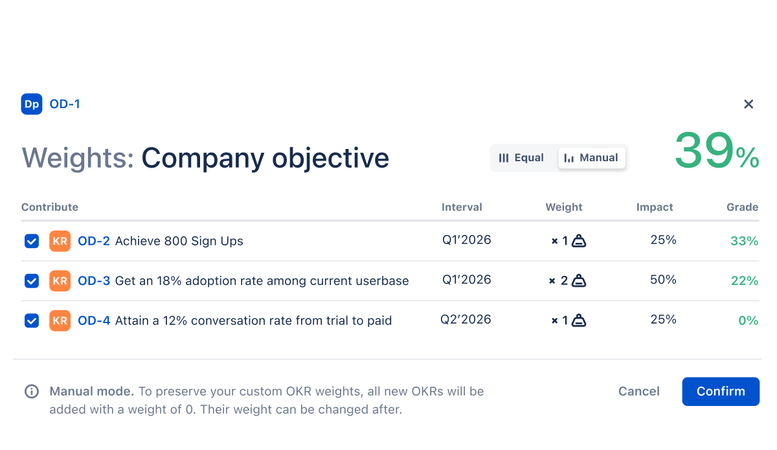
You can let linked work contribute to progress, switch off contribution from nested work items, or track the outcome manually through check-ins when that makes more sense. That gives teams automation without forcing every OKR into the same measurement model.
Bring business data into the same picture
Some goals are driven by delivery work. Others depend on metrics sitting elsewhere. For those, Oboard can connect to Power BI or use its public API to bring analytics data into your OKRs and automate metric updates.
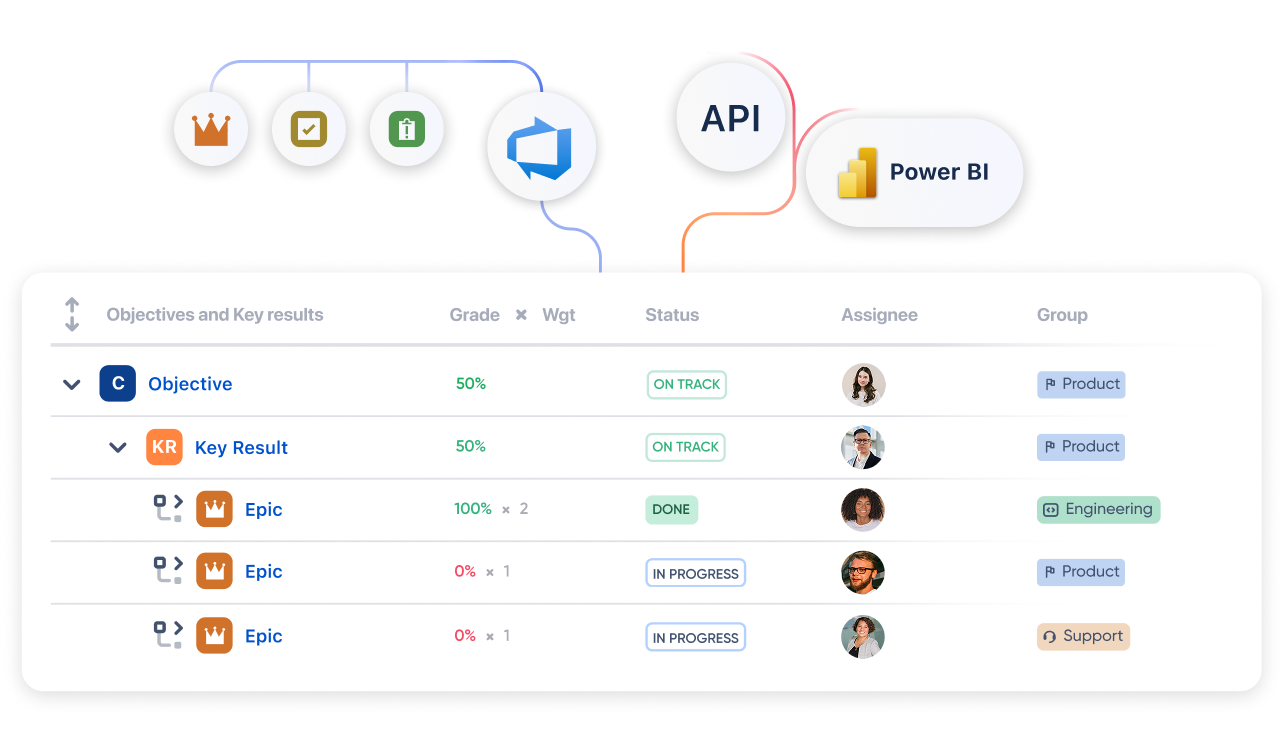
That means your strategy view can reflect both sides of execution: the work being completed in Azure DevOps and the business results showing up in your data.
Bring your Azure DevOps teams with you
Getting everyone into a new tool should not turn into an admin project of its own. You can invite colleagues directly from your Azure DevOps user list and import Azure groups in bulk, then control who can simply view goals and who can manage more of the Oboard environment. It makes it easier to bring the people already involved in delivery into the strategy process without manually rebuilding teams.
Keep OKR Check-ins in Microsoft Teams
OKRs only stay useful if people update them. Oboard check-ins combine progress, status, and written context so teams can explain what changed, what is blocked, and what comes next. For teams managing OKRs with Microsoft Teams, reminders can run weekly, monthly, or on a custom schedule and be delivered through Teams or email.
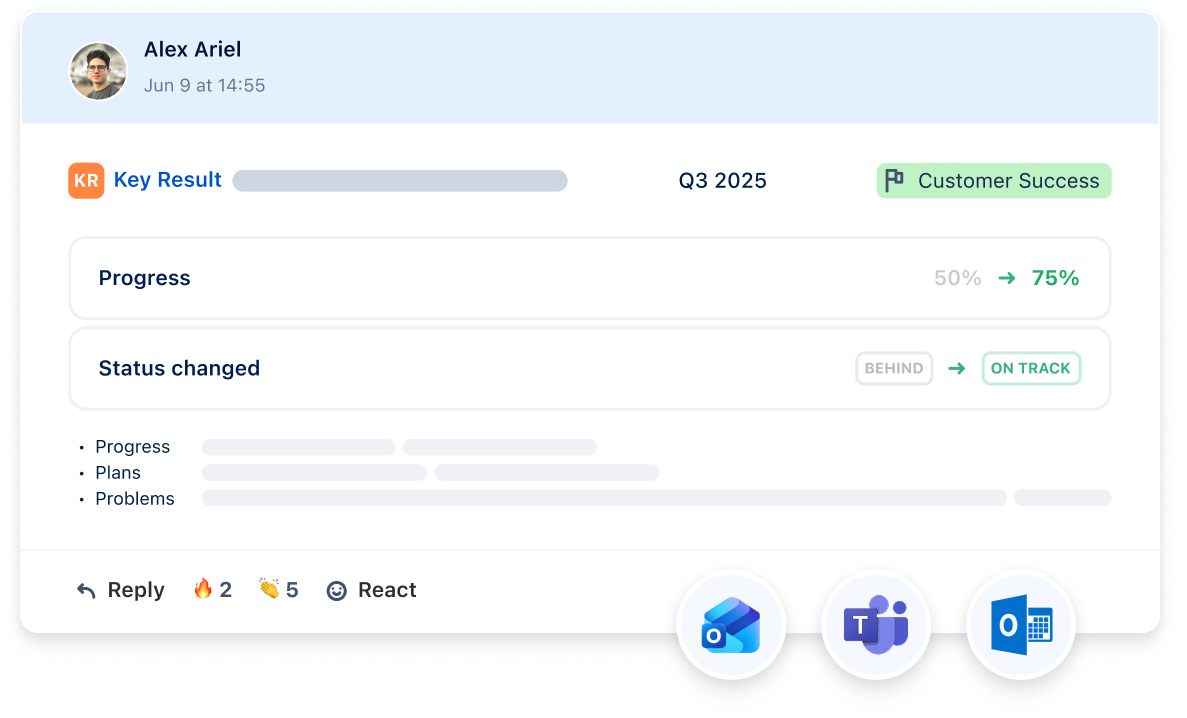
Completed check-ins can also be shared in connected Teams channels, keeping stakeholders informed where they already collaborate.
Turn progress into something teams can act on
Once everything is connected, Oboard gives different teams the views they need to make sense of progress. The Home page keeps individual and team goals close to check-ins.
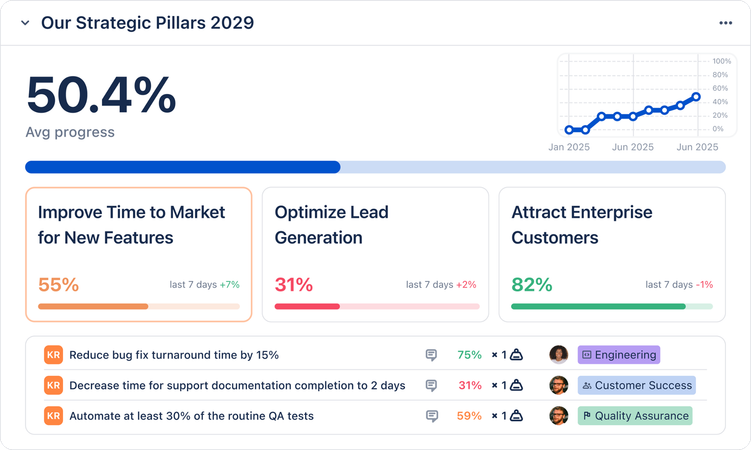
Performance reports help managers see progress across teams and spot goals that need attention. And custom dashboards can bring OKRs, KPI trends, and written updates together for company, department, or team reviews.
Clear statuses and actual-versus-expected progress make it easier to see which goals need attention before the quarter is over — while there is still time to do something about it.
A Microsoft OKR Tool for Teams Moving Beyond Viva Goals
With Microsoft Viva Goals retired as of December 31, 2025, teams that relied on it for OKRs now need another way to keep goals connected to the rest of their Microsoft workflow. Microsoft has also confirmed that Viva Goals is not being replaced by another Microsoft product, leaving third-party OKR tools to fill the gap.
💡Looking for a Viva Goals replacement? See how Oboard compares to Viva Goals in this direct comparison.
For teams looking for a Microsoft OKR tool or Microsoft OKR software after Viva Goals, Oboard keeps OKR management connected to the Microsoft tools already supporting day-to-day work: delivery in Azure DevOps, check-in reminders and updates in Microsoft Teams, and metric data from Power BI.
So moving on from Viva Goals does not have to mean rebuilding the rest of your Microsoft workflow. Oboard gives you a new home for OKRs while keeping the tools around them connected.
Join Our Upcoming Webinar: Strategy to Delivery with Oboard for Microsoft Azure DevOps
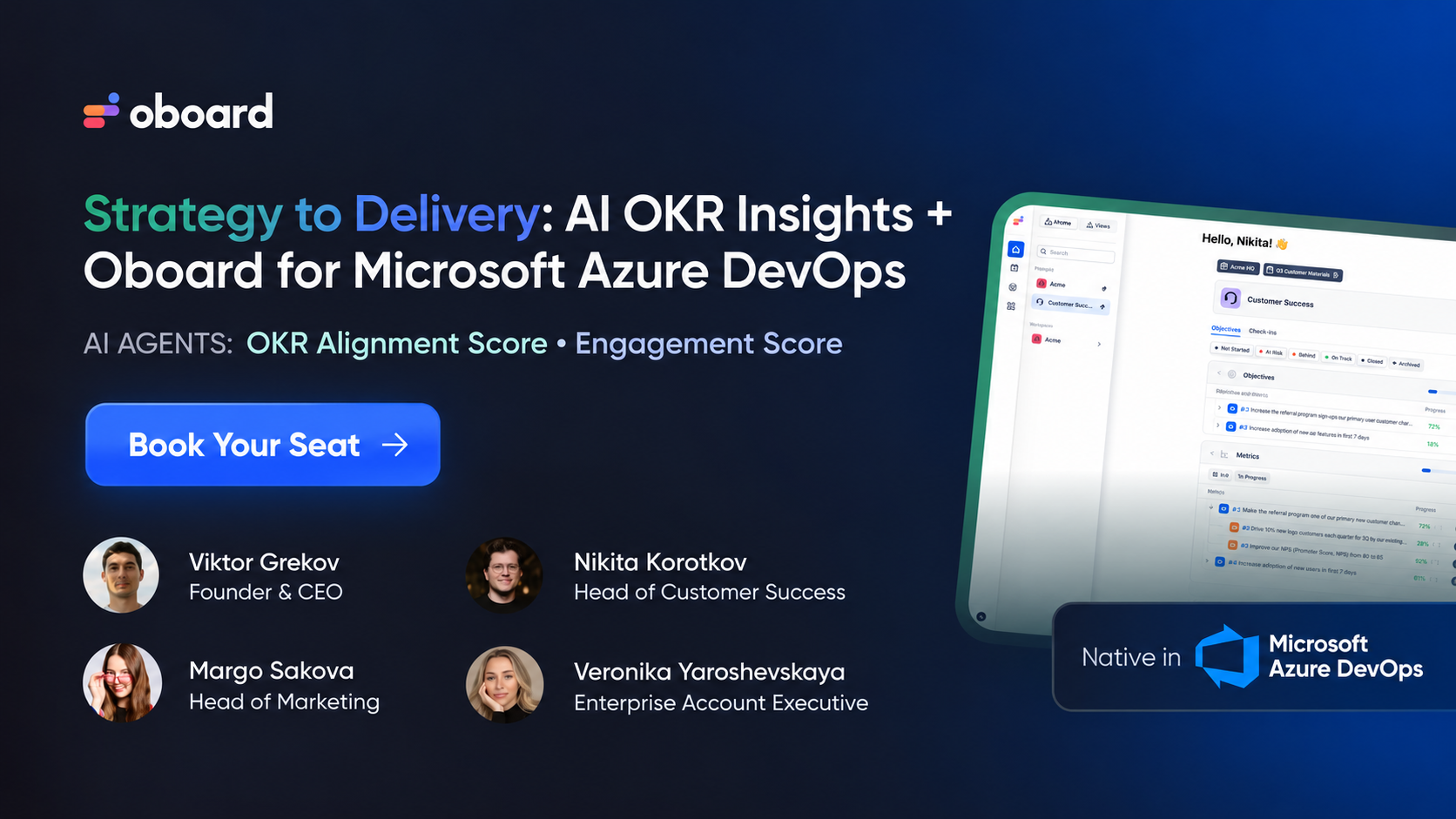
Want to see Oboard for Microsoft Azure DevOps in action? Join us on November 12, 2026, for our upcoming webinar, “Strategy to Delivery: AI OKR Insights + Oboard for Microsoft Azure DevOps.”
Our team will walk you through the new Oboard for Microsoft Azure DevOps, showing how to connect development work with strategic OKRs, automate progress tracking, and gain better visibility into execution.
We’ll also introduce two of Oboard’s AI-powered capabilities: OKR Alignment Score and Engagement Score, demonstrating how they help teams evaluate goal alignment and engagement with OKRs.
Get Started With Oboard for Azure DevOps
Getting started is straightforward:
- Install Oboard for Azure DevOps
- Invite your team
- Create your first OKRs and connect the Azure Boards work that supports them
Ready to manage OKRs in Azure DevOps with a Microsoft-friendly OKR tool?
Explore Oboard for Azure DevOps on the Visual Studio Marketplace, or talk to our team about the best setup for your organization.
